Understanding Fika
BeginnerHow to Host a Fika: A Simple Guide to Bringing People Together
Learn how to host a simple, meaningful fika with practical ideas for invitations, food, conversation, setting, and making guests feel welcome.
- Reading time
- 17 min
- Words
- ~4,200
- Sections
- 29
- Published
- July 12, 2026
- Updated
- July 12, 2026
Learning Goals
After reading this article you will:
- Plan and host a welcoming gathering without overcomplicating it.
- Write a low-pressure invitation and choose a right-sized group and setting.
- Prepare food, seating, and questions so you can actually sit down with your guests.
- Facilitate inclusive conversation and notice who needs a way in.
- Turn a one-off fika into a repeatable rhythm.
Key Takeaways
- Hosting fika begins with sending one simple invitation, not creating the perfect event.
- A first fika can be one-on-one or a small gathering of a few people.
- Invitations should be simple, clear, and low-pressure.
- Coffee and baked goods are strongly associated with Swedish fika, but hosting outside Sweden can be adapted respectfully to guests, setting, and local context.
- Good hospitality includes accessibility, welcome, attention, and participation.
- Conversation starters can help, but listening and follow-up questions matter more than asking many questions.
- Hosts should notice who is included, who is quiet, and who may need help entering the conversation.
- A host should prepare enough to be present rather than spending the entire gathering managing details.
- Repeated gatherings turn a pleasant afternoon into an ongoing relationship-building practice.
Series
Understanding Fika1 of 10 · ~150 min total
- What Is Fika? The Swedish Tradition That Can Improve Your Relationships
- The Meaning of Fika: More Than Coffee, More Than a Break
- The History of Fika in Sweden: Origins of a Beloved Tradition
- How to Practice Fika Every Day: A Simple Guide
- Why Fika Matters Today: Slowing Down and Connecting in a Busy World
- Common Misconceptions About Fika: What Fika Is — and What It Isn’t
- Fika vs. Coffee Break: What Makes Swedish Fika Different?
- Fika Around the World: How a Swedish Tradition Is Inspiring Connection Everywhere
- How to Host a Fika: A Simple Guide to Bringing People Together
- Fika Etiquette and Traditions: How to Show Up Well for a Swedish Pause
Introduction
Someone reads about fika and likes the idea. A friend keeps coming to mind. A neighbor just moved in. A coworker seems a little lonely. A parent has not sat down with their teenager in weeks. There is a quiet impulse: we should have people over.
Then the questions arrive. What should I serve? Does it need to be Swedish? How clean does the house need to be? Should I make invitations? What will we even talk about? How many people should I invite? What if the conversation stalls? What if I do it wrong?
Those questions can turn a simple invitation into an event that never happens. Hosting fika does not begin with the perfect table. It begins with making a little room for people. This guide walks through hosting a simple, welcoming fika — from the first invitation to the final goodbye — and shows how to turn one gathering into a practice worth repeating.
Before You Host: Remember What Fika Is For
Fika is a Swedish tradition of pausing together — usually with coffee and something small to eat, though the details vary by home, workplace, and occasion. If you want the fuller background, start with What Is Fika? and The Meaning of Fika. A fika gathering makes intentional time for pausing, conversation, presence, hospitality, listening, sharing something simple, and strengthening relationships through repeated interaction.
Coffee and food can support the gathering. They are not the purpose. The host’s most important job is not to impress people; it is to help people feel welcome — the guest-centered kind of hospitality that asks what would put this person at ease rather than what would look impressive. If you have ever wondered how fika differs from an ordinary coffee break, see Fika vs. Coffee Break.
“The best fika is not the one with the most impressive table. It is the one where people feel welcome enough to stay.”
Step 1: Decide Why You Are Gathering
A small sense of purpose helps the rest of the planning fall into place. You might want to:
- reconnect with a friend you have not seen in a while
- welcome a new neighbor or coworker
- spend unhurried time with family
- create conversation among coworkers away from a meeting
- bring generations together
- meet someone new
- celebrate an ordinary day
- start a recurring community gathering
- simply make time for people
A fika does not need a formal objective. But knowing why you are gathering helps you decide who to invite, where to meet, how many people to include, how much time to allow, and whether a conversation prompt might be useful.
Step 2: Choose Who to Invite
A first hosted fika should usually be kept simple. Three common shapes:
One-on-one fika works well for deeper conversation, reconnecting, meeting someone new, mentoring, or welcoming a new coworker or neighbor.
Small-group fika of three to six people suits friends, families, neighbors, coworkers, book clubs, and intergenerational gatherings.
Larger fika can work for workplaces, community groups, cultural organizations, schools, clubs, and neighborhood gatherings. Larger gatherings need more intentional hospitality because people can easily stay only with those they already know.
These are practical Fika Pause recommendations, not official Swedish rules. If you have never hosted fika before, invite one to four people. A smaller gathering makes it easier to focus on conversation, listening, and welcoming everyone.
Step 3: Make the Invitation Simple
The invitation should tell guests when, where, roughly how long, whether to bring anything, and that the gathering is relaxed. Here are messages you can adapt word-for-word.
Casual text message: “Would you like to come over for coffee or tea and a little fika this Saturday afternoon? Nothing fancy — I’d just enjoy spending some time together.”
Reconnecting with a friend: “I realized it has been too long since we had time to really catch up. Would you like to meet for fika sometime next week?”
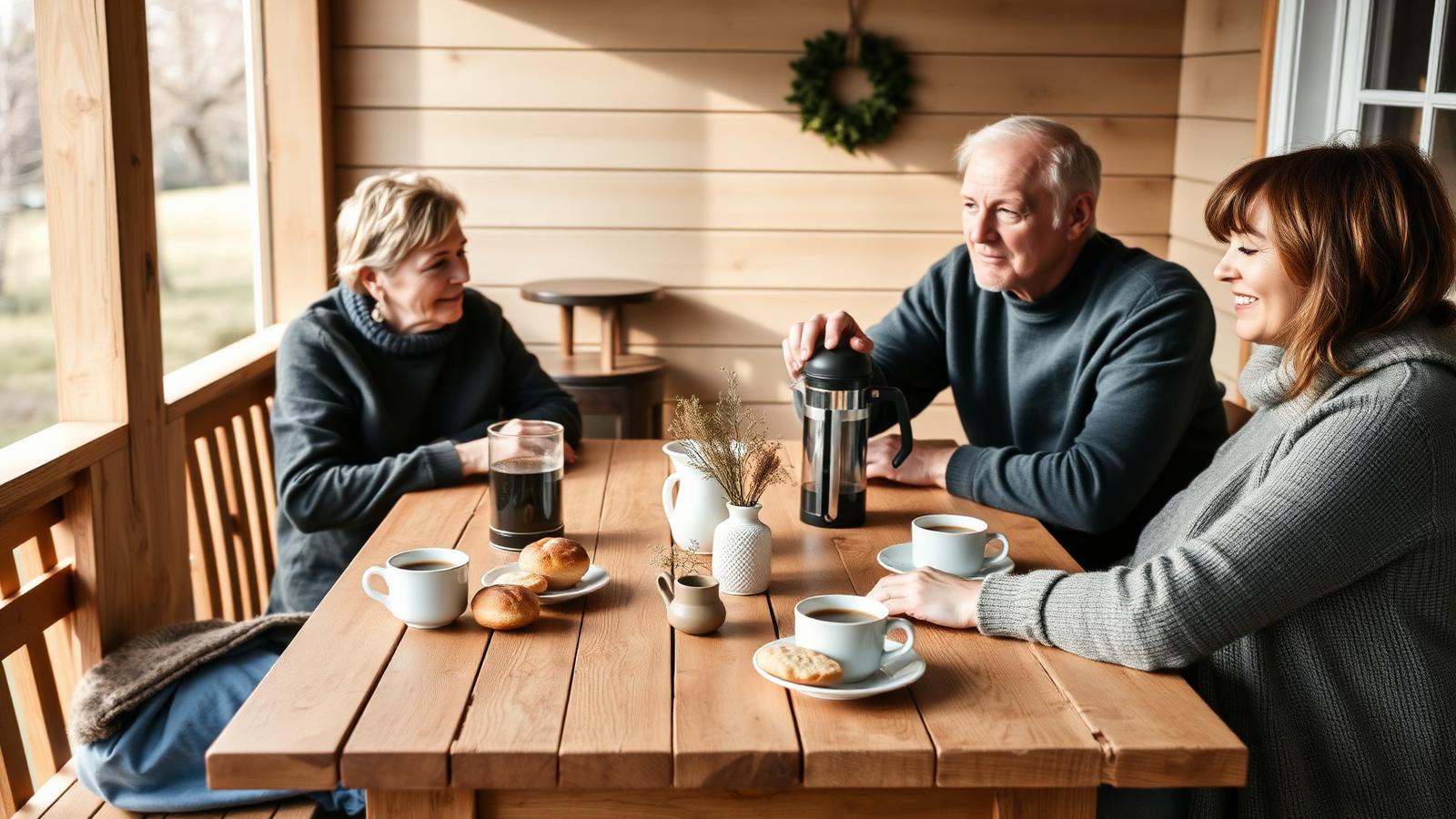
Inviting a neighbor: “We’re having coffee and something simple to eat on the porch Sunday afternoon around 3. We’d love to have you join us for fika if you’re free.”
Workplace invitation: “I’m taking a short fika break at 2:30. Want to join me for coffee, tea, and a little conversation away from our desks?”
Family invitation: “Let’s have fika together Sunday afternoon. Bring a story from your week you want to share.”
Community invitation: “Join us for a simple community fika — something to drink, something small to eat, and time to meet neighbors and enjoy conversation.”
Do not make people wonder whether they are being invited to an elaborate party. A clear, low-pressure invitation is easier to accept.
Step 4: Choose the Right Place
Fika can happen almost anywhere people can pause and pay attention:
- a kitchen or dining table
- a porch, backyard, or garden
- a park or picnic table
- a café or bakery
- a workplace break room
- a community center, library, or senior center
- a classroom, faith-community space, or neighborhood common area
- a video call when distance prevents meeting in person
A good fika setting is comfortable enough to stay in, accessible to the people invited, not excessively noisy, and free of the distractions you can reasonably reduce. It should not require perfection from the host.
Accessibility is not an afterthought. Consider physical access, seating, dietary needs, transportation, sensory needs, communication needs, financial accessibility, and cultural comfort. Asking guests once about allergies, mobility, or scheduling shows care and prevents avoidable exclusion.
Step 5: Decide How Long the Fika Will Last
There is no official universal duration for fika. Practical planning ranges:
- 15–20 minutes — a brief workplace, school, or everyday fika.
- 30–60 minutes — a relaxed fika with time for conversation.
- 60–90 minutes — a longer family, friend, neighborhood, or community gathering.
- Longer — when people naturally want to stay, eat, or continue talking.
Give guests a rough ending time in the invitation. People who worry about open-ended commitments are more likely to say yes when they know when they can leave.
Step 6: What Should You Serve at Fika?
Coffee has a strong historical and cultural association with Swedish fika. Tea and other beverages can also be served. Something sweet — especially baked goods — is common, but food varies by household, workplace, occasion, and preference. For more on this, see Fika Around the World.
Drinks:
- coffee
- tea
- water
- milk
- hot chocolate
- another beverage appropriate to your guests
Simple sweets:
- cinnamon buns (kanelbullar) — strongly associated with Swedish fika
- cardamom buns
- cookies
- a slice of cake
- muffins or pastries
- fruit
- something homemade — or something purchased
Savory options: When appropriate to the setting, hosts may also offer simple breads, sandwiches, crackers, cheese, or other foods. Not every option listed here is a traditional Swedish fika food; cinnamon and cardamom buns are traditional, most of the others are practical choices for hosting an accessible gathering outside Sweden.
Do You Need to Bake Something?
No. Homemade baking can be meaningful and has an important place in Swedish fika culture and hospitality, but it is not a prerequisite for creating time together. You can bake something, buy something, serve food already in the kitchen, ask guests to bring something, or keep the food extremely simple.
If preparing food makes you postpone the invitation, simplify the food. The purpose is to gather.
“Hospitality is not measured by how much you prepare. It is felt in how people are received.”
How Much Food Should You Serve?
Practical planning, not cultural rules:
- One-on-one or small fika: one or two simple food choices are enough.
- Small group: two or three options can accommodate preferences without turning the gathering into a meal.
- Larger gathering: plan by group size, duration, dietary needs, and whether guests expect a snack or a meal.
Fika is not defined by abundance. Avoid waste and unnecessary expense. Ask about allergies and dietary needs where appropriate.
Step 7: Prepare the Space Without Trying to Make It Perfect
Practical hospitality is small and boring in the best sense:
- clear enough space for people to sit
- put drinks and food where people can reach them
- reduce unnecessary noise (TV off, music low)
- put away obvious distractions
- make restrooms easy to find
- have water available
- consider lighting — warmer and softer usually helps
- make room for mobility devices if needed
- create a place for coats or belongings
- prepare enough that you can sit down too
A host who spends the entire fika serving, cleaning, cooking, or managing details may miss the gathering they created. Prepare so that you can participate.
Step 8: Welcome People Well
Hospitality begins before the conversation. When people arrive:
- greet each person
- use their name
- introduce people who do not know one another
- show them where to put belongings
- offer a drink
- help them find a place to sit
- include anyone who arrives alone
- notice anyone standing outside the conversation
Introduce people with a small bridge they can walk across: “John, this is Maria. You both mentioned enjoying gardening, and I thought you might enjoy meeting each other.” A short shared interest gives guests somewhere to begin.
Step 9: Help the Conversation Begin
You do not need to control the entire conversation. Your role is to make participation easier. Easy opening questions:
- How has your week been?
- What is something you are looking forward to?
- What has made you laugh lately?
- What have you been enjoying recently?
- What is something you wish you had more time for?
- What is one place you would enjoy visiting again?
- What is something you learned recently?
- What is one ordinary thing that made your day better?
Follow-up questions matter more than opening ones. If someone says, “I started walking every morning,” a good next question is, “What do you enjoy most about your morning walks?” The second question is usually where the real conversation begins. For more on this rhythm, see How to Practice Fika Every Day and How to Ask Better Questions.
Should You Use Conversation Starters?
Conversation starters can help when:
- guests do not know one another
- children are participating
- the group is larger than usual
- the gathering has a theme
- conversation repeatedly stalls
- people want to move beyond small talk
They should not turn fika into an interview, a forced vulnerability exercise, a competition, a classroom quiz, or a rigid program. Fifteen fika conversation starters you can borrow:
Light:
- What is something you have enjoyed this week?
- What is a place you never get tired of visiting?
- What food reminds you of home?
- What is something small that made you smile recently?
- What season do you enjoy most, and why?
Story-based:
- What is a tradition you remember from childhood?
- Who taught you something you still use today?
- What is a trip or journey you still talk about?
- What is one of your favorite memories involving food?
- What is something you enjoyed doing when you were ten years old?
Reflective:
- What do you wish people made more time for?
- Who is someone you have been meaning to reconnect with?
- What makes you feel welcomed?
- What is something you are grateful you noticed recently?
- What is one thing you hope to learn this year?
Step 10: Make Sure Everyone Has Room to Participate
Good hosting is largely the practice of noticing. As host, you can:
- notice who has spoken and who has not
- invite quieter guests without putting them on the spot
- gently redirect chronic interruption
- avoid allowing one person to dominate
- ask follow-up questions
- create smaller conversations within larger gatherings
- include children meaningfully
- explain inside jokes
- avoid conversations that intentionally exclude newcomers
- notice when someone seems uncomfortable
Language that helps: “Maria, I’d be interested in hearing what you think, if you’d like to share.” “I want to make sure we get to hear the rest of David’s story.” “Has anyone else had a similar experience?”
“Good hosting is largely the practice of noticing.”
What If the Conversation Becomes Awkward?
Ordinary silence is not a failure. A comfortable pause is part of a real conversation. If the room needs a little help, you can allow the pause, ask an open-ended question, refer back to something someone said earlier, share a short story of your own, invite another person in, change the subject naturally, or bring attention to the food, the place, the season, or the occasion. You do not need to rescue every silence.
What If People Check Their Phones?
Handle this realistically. Model the behavior you hope for: put your own phone away and, if it helps, name it once at the start — “I’m going to put my phone away for a little while because I’ve been trying to give conversations more attention.” A phone basket can work with groups who are comfortable with it, but do not embarrass or police guests. Caregivers, workers, parents, and others may genuinely need to remain reachable. Invite presence rather than enforce it. For what is expected of guests around phones and attention, see Fika Etiquette and Traditions.
Hosting Fika With Children
Children should not simply be present while adults talk. They can participate. Let them help prepare or serve something. Let them welcome guests at the door. Let a child choose the conversation question. Ask follow-up questions about their stories. Include grandparents and other generations. Keep the gathering developmentally appropriate. Allow movement. Keep expectations realistic. Do not force children to disclose personal information. A recurring family fika is one of the simplest ways to practice listening and hosting skills across generations. Fika is not a substitute for counseling, family therapy, or educational programs; it is an ordinary shared ritual.
Hosting Fika at Work
A workplace fika can create space for coworkers to be human with one another for a few minutes. Invite a coworker for a short one-on-one fika. Create a recurring voluntary team fika that can survive a busy month. Welcome new employees. Occasionally mix departments or roles. Avoid turning every gathering into a meeting. Make participation inclusive: provide non-coffee options, consider remote employees, respect scheduling constraints, and never force personal disclosure. A workplace fika inspired by the Swedish tradition is different from a generic mandatory employer wellness program — and it is not a substitute for fair pay, reasonable workload, or good management. For more on the distinction between fika and an ordinary coffee break at work, see Fika vs. Coffee Break. For how a shared pause fits into welcoming someone who has just joined, see Making People Feel Welcome at Work.
Hosting Fika Outdoors
Porches, backyards, gardens, beaches, parks, picnic tables, and community spaces all work. A short walking fika — a coffee in hand, a slow loop around a neighborhood — is a real form. Plan for weather, seating, shade, water, cleanup, food safety, restrooms, and transportation. Fika does not require a perfect indoor room.
Hosting Fika Virtually
Geographically separated friends, relatives, or coworkers can create an intentional online gathering inspired by fika. That is not the same as declaring every video call “authentic Swedish fika.” Keep the group small. Set a real time. Encourage everyone to bring a drink or snack if they wish. Avoid multitasking. Bring one conversation question. Leave room for ordinary talk. A recurring schedule — the same Sunday evening each month, for example — helps a virtual fika actually happen. For more on how fika changes when it travels, see Fika Around the World.
How to End a Fika Well
Endings matter. Thank people for coming. Acknowledge something you enjoyed. Let guests know there is no pressure to stay indefinitely. Ask whether they would like to gather again, and, when appropriate, choose a next date. Follow up afterward. Include someone who could not attend next time.
Try something like: “I’m really glad we made time for this. Would you like to do it again next month?” Repetition is what turns a pleasant afternoon into a relationship-building practice.
After Everyone Leaves: Three Questions for the Host
Reflect without perfectionism. A fika that felt a little awkward but ended with a genuine “let’s do this again” is a successful fika.
Seven Fika Gatherings You Can Host This Month
1. Reconnecting fika. Invite someone you have not seen recently. One-on-one, at a café or your kitchen table. Coffee or tea, one small thing to share. Prompt: What has changed in your life since we last had time to really talk?
2. Neighbor fika. Invite one or two nearby neighbors. On the porch or in the yard. Coffee, tea, and a small plate of cookies. Prompt: What is something you appreciate about living here?
3. Intergenerational fika. Bring together people of different ages — grandparents, parents, children, a neighbor across generations. At a kitchen table where everyone can see each other. Simple sweets and a jug of water. Prompt: What is something people did for fun when you were ten?
4. Welcome fika. Invite someone new to a workplace, school, neighborhood, organization, or community. Somewhere quiet enough for conversation. Coffee, tea, and one bought pastry. Prompt: What is something you wish people knew about you when you first meet?
5. Family story fika. Gather around one family story. At home, at the same table you usually eat at. Whatever the family already likes to eat. Prompt: What is a story from our family that you hope people keep telling?
6. Outdoor fika. Meet in a park, garden, porch, or another accessible outdoor place. Thermos of coffee, a jug of water, fruit and something baked. Prompt: What is something you notice when you spend time outside?
7. Gratitude fika. Gather to notice people, moments, or ordinary things you appreciate. Small group, comfortable seating. Warm drinks and something simple. Prompt: Who is someone who made your life a little better recently?
A Simple Fika Hosting Checklist
Before:
- Choose why you are gathering.
- Invite one person or a small group.
- Set the time and place.
- Ask about important accessibility or dietary needs.
- Decide what simple food or drink, if any, you will serve.
- Prepare enough that you can participate too.
- Choose one conversation question if useful.
During:
- Welcome each person.
- Introduce people.
- Put your own distractions aside when possible.
- Notice who is participating.
- Ask follow-up questions.
- Make room for quieter voices.
- Sit down and join the fika.
After:
- Thank people.
- Follow up if appropriate.
- Notice who might be included next time.
- Decide whether to gather again.
Your First Hosted Fika: A 24-Hour Plan
Right now: choose one person.
Within 10 minutes, send this message: “Would you like to have fika with me tomorrow? Nothing fancy — just something to drink, something simple to share, and time to catch up.”
Before the fika, prepare a place to sit, something to drink, something simple to eat if desired, one conversation question, and one fewer distraction.
During the fika, welcome. Sit down. Ask. Listen. Follow up. Share. Do not rush.
Before your guest leaves, ask: “Would you like to do this again?”
You have now hosted a fika.
“A hosted fika is not an event you perform. It is a door you open for someone.”
How Fika Pause Can Help You Host More Meaningful Gatherings
Hosts usually do not need more food ideas. They need help creating opportunities for conversation, reflection, welcome, listening, and connection. Fika Pause is an optional practical companion for that: conversation prompts, daily reflections, Human Connection Skills, small connection challenges, and family or community ideas — a way to keep practicing welcoming, noticing, listening, encouraging, asking follow-up questions, and creating belonging between gatherings.
Fika Pause is not required to host fika. Fika belongs to a Swedish cultural tradition that long predates any app. For the small customs that shape how guests and hosts show up well together, see Fika Etiquette and Traditions. To read more about the tradition and how it has traveled, see The History of Fika in Sweden and Why Fika Matters Today.
Knowledge Check
Frequently Asked Questions
- How do you host a fika?
- Choose one person or a small group, invite them with a simple message, pick a comfortable place and a rough time, serve something to drink and something small to eat if you wish, and give the gathering your attention. The most important step is not preparation — it is deciding to make the time and welcoming people when they arrive.
- What should I serve at fika?
- Coffee is traditional in Sweden, and tea, water, milk, or hot chocolate all work well too. Something small and sweet — a cinnamon bun, a cookie, a piece of cake, a muffin, or fruit — is common but not required. Simple, real, and enough for the group is better than elaborate.
- Does fika have to include coffee?
- No. Coffee is central to Swedish fika culturally and historically, but the pause and the people matter more than the exact drink. Tea, hot chocolate, or another beverage is welcome, especially when hosting people who do not drink coffee.
- Do I need to serve Swedish food?
- No. Cinnamon and cardamom buns are strongly associated with Swedish fika, but hosting fika outside Sweden does not require importing Swedish products. A locally baked biscuit, a homemade cookie, or a piece of fruit can all be appropriate. Be honest about which foods are traditionally Swedish and which are your own practical choices.
- How many people should I invite to fika?
- A first fika works best with one to four people. One-on-one fika is ideal for deeper conversation, and small groups of three to six suit friends, families, and colleagues. Larger fikas can work for communities and workplaces but need more intentional hosting so no one is left standing on the edge.
- How long should a fika last?
- There is no official length. Short workplace or everyday fikas may last fifteen to twenty minutes. A relaxed home fika often runs thirty to sixty minutes. Longer family or community gatherings may last an hour or more. Give guests a rough end time in the invitation so they know what they are signing up for.
- Do I need to bake something for fika?
- No. Homemade baking is meaningful and has an important place in Swedish fika culture, but it is not required. Buy something, use what you already have, or ask a guest to bring something. If baking makes you postpone the invitation, simplify the food. The point is to gather.
- What do people talk about during fika?
- Ordinary life. What has happened this week, what is on someone's mind, a memory, a story, something they are looking forward to. Fika conversations do not need to be deep or dramatic. Small, honest questions and real follow-up questions matter more than a rehearsed agenda.
- Can children participate in fika?
- Yes. Fika is a family practice in many Swedish homes. Children can help welcome guests, choose a question, or help serve. Keep expectations developmentally appropriate, allow movement, and do not force children to disclose personal information they would rather not share.
- Can I host fika at work?
- Yes. A short, voluntary workplace fika can create space for coworkers to be human with one another. Keep it inclusive: provide non-coffee options, respect scheduling constraints, avoid mandatory personal disclosure, and consider remote employees when planning. A workplace fika is not a substitute for fair pay, workload, or management practices.
- Can I host fika outdoors?
- Yes. Porches, gardens, parks, picnic tables, and even a short walking fika can work. Consider weather, seating, shade, water, restrooms, transportation, and accessibility. Fika does not need a perfect indoor room.
- Can I host fika virtually?
- You can borrow from fika's emphasis on unhurried conversation to shape a video call, especially for friends, family, or colleagues who live far apart. Keep the group small, set a real time, encourage everyone to bring a drink or snack, and try to leave multitasking closed in another tab.
- Can I host fika if I am not Swedish?
- Yes. Fika is a Swedish cultural tradition open to anyone who approaches it with respect: use the word accurately, acknowledge its Swedish origins, do not claim to have invented or improved it, and center the practice on genuine connection rather than aesthetics or marketing.
- How can I make guests feel welcome?
- Greet each person by name, help them find a place to sit, introduce people who do not know each other with a small bridge (a shared interest, a place, a story), offer a drink, and notice anyone standing outside the conversation. Welcome is built in small, repeated attentions, not in grand gestures.
- How do I make fika a recurring tradition?
- Before your first fika ends, ask whether people would like to meet again and choose a rough next date. Keep the gathering small enough to sustain. Follow up afterward. Over time, a recurring fika creates the kind of repeated interaction that helps relationships grow.
- What if no one accepts my invitation?
- A declined invitation is rarely about you. People are busy, tired, unwell, or already committed. Try one or two other people, offer a different day, or start with a one-on-one. If a first fika does not happen, that is information about scheduling, not evidence about your worth as a host.
Sources & Further Reading
Organization
The Swedish Institute — sweden.se
Official Swedish cultural overview describing fika as a daily practice of pausing together, usually with coffee and something small to eat.
Organization
About Sweden — The Swedish Institute
Svenska institutet
Swedish public agency promoting interest in Sweden abroad; a primary source for Swedish cultural context.
Organization
American Swedish Institute, Minneapolis
Swedish-American cultural institution offering public programs on Swedish heritage, hospitality, and fika.
Organization
Institute for Language and Folklore (Isof)
Institutet för språk och folkminnen
Swedish government institute for language and folklore; a primary source on Swedish everyday cultural practice.
Book
Fika: The Art of the Swedish Coffee Break
Anna Brones & Johanna Kindvall (Ten Speed Press, 2015)
Widely cited English-language introduction to fika as a Swedish tradition and everyday practice.
Research
Office of the U.S. Surgeon General (2023)
Frames social connection as a public-health concern and highlights the value of ordinary, repeated in-person interaction.
On Fika Pause
On Fika Pause
On Fika Pause
On Fika Pause
On Fika Pause
On Fika Pause
On Fika Pause
On Fika Pause
Continue Your Fika Journey
Learning about fika is only the beginning. The real transformation happens when you practice it. Explore daily reflections, conversation prompts, kindness challenges, and meaningful connection activities inside Fika Pause.
Keep going
Continue Learning
Recommended Series
You May Also Like
Understanding Fika
How to Practice Fika Every Day: A Simple Guide
Learn how to practice fika every day with simple ideas for home, work, school, and community. Discover how small daily pauses create stronger relationships.
Understanding Fika
What Is Fika? The Swedish Tradition That Can Improve Your Relationships
Discover the meaning of fika, the Swedish tradition of slowing down to connect over coffee, conversation, and community—and how to practice it every day.
Understanding Fika
Fika vs. Coffee Break: What Makes Swedish Fika Different?
Fika is often translated as “coffee break,” but the two are not exactly the same. Discover what makes Swedish fika different and why the distinction matters.
Newest Guides
Families
Small Family Rituals: Making Room for Everyday Connection
Meaningful shared routines don't need to be elaborate, expensive, or picture-perfect. How to notice, shape, and keep small family rituals flexible — including fika with grandparents.
Families
Beyond “How Was Your Day?”: Conversation Starters for Family Fika
Specific, playful, and choice-based questions that give children and adults an easier place to begin — without interrogating anyone or asking for personal disclosure.
Families
The Family Fika: A Simple Ritual for Slowing Down Together
A family fika is a few minutes when people stop what they are doing and make room for conversation, listening, or simply being together. What it can look like, and why it doesn't need to be elaborate.
Popular Guides
Understanding Fika
What Is Fika? The Swedish Tradition That Can Improve Your Relationships
Discover the meaning of fika, the Swedish tradition of slowing down to connect over coffee, conversation, and community—and how to practice it every day.
Understanding Fika
The Meaning of Fika: More Than Coffee, More Than a Break
Discover the true meaning of fika and why this Swedish tradition is about slowing down, building relationships, and creating meaningful moments together.
Understanding Fika
How to Practice Fika Every Day: A Simple Guide
Learn how to practice fika every day with simple ideas for home, work, school, and community. Discover how small daily pauses create stronger relationships.